
Facial Botox is considered one of the most common non-surgical cosmetic procedures worldwide, due to the clear results it provides in reducing wrinkles and improving the appearance of the skin without the need for surgery or a long recovery period. However, the success of this procedure depends largely on a correct understanding of its benefits, expected results, and the medical warnings associated with it. In this article, we provide a comprehensive medical guide to help you make an informed and safe decision.
What Is Facial Botox?
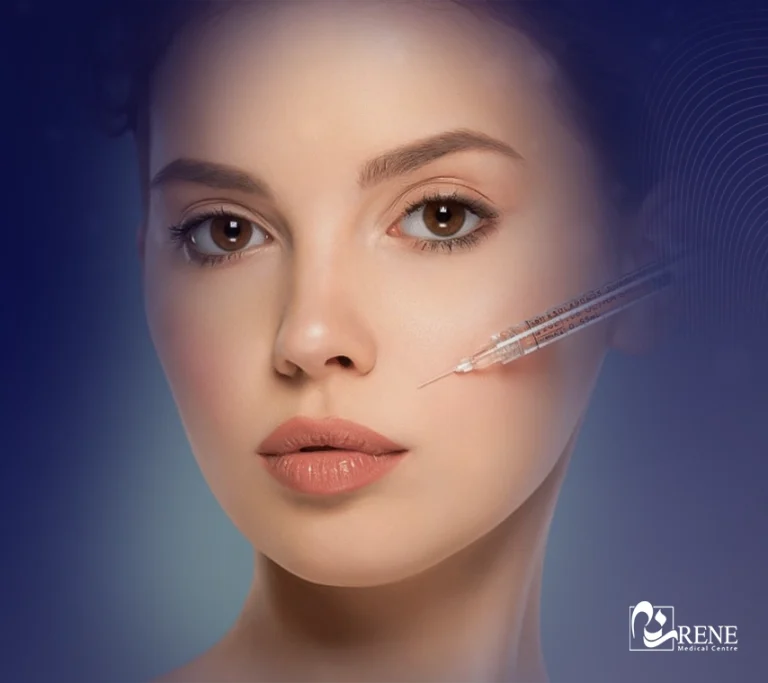
Facial Botox is a non-surgical cosmetic procedure used to reduce expression wrinkles and improve the appearance of the skin in a safe and temporary manner. This procedure relies on injecting a medical substance derived from botulinum toxin in precise doses into specific facial muscles, which leads to relaxation of these muscles and limits their contraction, thereby reducing the appearance of wrinkles associated with repeated facial expressions.
The main uses of facial Botox include:
- Reducing forehead wrinkles
- Treating lines between the eyebrows
- Reducing wrinkles around the eyes (crow’s feet)
- Improving the overall appearance of the face without changing facial features
Botox is characterized as a quick procedure that does not require surgery or a long recovery period, and its results are reversible and last for several months. When performed by a qualified physician using appropriate doses, it provides a natural and more youthful appearance while preserving natural facial expressions.
How Does Botox Work?
Botox works by temporarily affecting the communication between nerves and muscles. When injected into specific facial muscles, Botox prevents the transmission of nerve signals that stimulate muscle contraction, leading to temporary muscle relaxation. Since expression wrinkles primarily result from repeated muscle movement, reducing muscle activity directly reflects on smoother skin and improved wrinkle appearance.
Botox mechanism of action in brief:
- It prevents the release of acetylcholine responsible for muscle contraction
- It reduces the movement of wrinkle-causing muscles
- It allows the skin to relax and stretch naturally
- It does not affect sensation or sensory nerves
What does the patient notice after injection?
- The effect of Botox begins within several days
- Wrinkles gradually decrease without eliminating facial expressions
- The effect usually lasts from 3 to 6 months
This temporary and reversible mechanism makes Botox a safe procedure when used in precise medical doses and under specialist medical supervision.
Benefits of Facial Botox
Facial Botox is one of the most widely used non-surgical cosmetic procedures due to the clear and rapid results it provides with minimal medical intervention. When used in appropriate doses and administered by a qualified physician, Botox helps improve the appearance of wrinkles while preserving natural facial expressions.
The main benefits of facial Botox include:
- Reducing expression wrinkles on the forehead and between the eyebrows
- Softening lines around the eyes (crow’s feet)
- Giving the face a more youthful and refreshed appearance
- A quick procedure without surgery or general anesthesia
- No need for a long recovery period
- Natural results when injected correctly with precise dose distribution
- The ability to repeat the procedure and control the intensity of the result
- Improving skin smoothness and overall appearance
In addition to cosmetic benefits, Botox is characterized as a temporary and adjustable procedure, giving patients greater flexibility and a safe experience when medical recommendations are followed.
Facial Botox is widely used as a non-surgical cosmetic solution to improve skin appearance and reduce expression wrinkles in a safe and temporary manner. When injected correctly and with carefully calculated doses, Botox helps give the face a more relaxed and youthful appearance without affecting natural facial expressions.
Thanks to these advantages, Botox is considered a suitable option for individuals seeking noticeable cosmetic improvement with minimal medical intervention and risks.

When Do Botox Results Appear?
Botox results appear gradually after injection and are not immediate. The timing of appearance and duration depend on the dose used, the injection area, and the nature of each person’s muscles.
Initial results begin within 3 to 5 days after injection. Results gradually improve and reach their optimal appearance within 7 to 14 days. The patient notices muscle relaxation and a clear reduction in expression wrinkles
How long do Botox results last?
Results usually last between 3 to 6 months. As the effect gradually wears off, muscle movement returns naturally. Injections can be repeated to maintain results according to the physician’s recommendation. It should be noted that adherence to post-injection instructions and choosing a qualified physician play an important role in achieving natural results that last as long as possible.
When do Botox results begin?
Results begin to appear within 3 to 7 days after injection. Final results are achieved within 10 to 14 days. Muscle movement gradually decreases and expression wrinkles soften
Results usually last from 3 to 6 months. Muscle activity gradually returns afterward. Injections can be repeated to maintain results according to the physician’s recommendation. To obtain better and more stable results, it is recommended to follow post-injection instructions and undergo Botox treatment by a qualified physician.
Medical Warnings and Potential Complications
Although Botox is considered a relatively safe cosmetic procedure when used in correct medical doses and administered by a qualified physician, it may be associated with certain medical warnings and potential complications that should be known before deciding on injection. Most of these complications are mild and temporary, but neglecting medical instructions may increase their likelihood.
The most common potential complications after Botox injections include:
- Mild redness or swelling at the injection site
- Minor bruising that resolves within days
- Temporary headache after the procedure
- A sensation of tightness or mild heaviness in the treated area
Less common but medically important complications
- Temporary drooping of the eyelid or eyebrow due to inaccurate injection
- Mild asymmetry in facial expressions
- Temporary weakness in some muscles adjacent to the injection site
Medical warnings to be aware of
Botox should be avoided during pregnancy and breastfeeding. It is not recommended for individuals with certain neurological or muscular diseases. The physician must be informed of any medications or supplements being taken
Choosing a non-specialized provider increases the risk of undesirable results. Most of these complications are temporary and improve spontaneously within a short period, especially when medical instructions are followed. Therefore, proper physician selection and prior medical evaluation are the most important factors in ensuring a safe experience and natural results.

Who Are Suitable Candidates for Botox Injections?
Botox is a suitable option for many individuals who wish to improve their facial appearance in a non-surgical manner, provided they have realistic expectations and the procedure is performed after appropriate medical evaluation. Choosing the right candidate plays a key role in the success of results and maintaining a natural appearance.
Suitable candidates for Botox injections include:
- Individuals with visible expression wrinkles on the forehead or between the eyebrows
- Those with lines around the eyes caused by repeated facial expressions
- Individuals in good general health
- Those seeking a non-surgical cosmetic procedure with a short recovery period
- Individuals with realistic expectations for temporary and adjustable results
- Adults who do not have medical contraindications to Botox injections
It is always preferable to undergo a consultation with a qualified physician before injection to assess wrinkle type, muscle strength, and determine the appropriate dose, ensuring safe and natural results.
Post-Botox Injection Care
Post-Botox care plays an important role in achieving natural results and reducing the likelihood of complications. Although the procedure is simple and non-surgical, following post-injection instructions helps stabilize the substance in the correct location and speeds up recovery.
Basic post-Botox care instructions:
- Avoid rubbing or massaging the face for 24 hours
- Refrain from lying down or excessive bending during the first 4–6 hours
- Avoid strenuous exercise and high heat on the first day
- Avoid saunas or steam baths for 24–48 hours
- Avoid touching injection areas or applying heavy makeup during the first hours
Follow the physician’s specific instructions for each case.
Additional tips to ensure the best results
- Maintain natural facial expressions and avoid deliberate muscle pressure
- Drink sufficient amounts of water
- Consult a physician if severe pain, abnormal swelling, or noticeable drooping occurs
By following these guidelines, most individuals can quickly return to their daily activities while minimizing risks and achieving more stable and natural results.
Frequently Asked Questions (FAQ)
1. Are Botox injections painful?
Pain is usually very mild and feels like a brief needle prick lasting only seconds. In most cases, anesthesia is not required, and a topical numbing cream may be used if necessary.
2. Does Botox change facial features?
No. When injected correctly and in appropriate doses, Botox preserves natural facial expressions. Undesirable changes usually occur with excessive dosing or inaccurate injection.
3. How often can Botox injections be repeated?
Botox injections can usually be repeated every 3 to 6 months, depending on how quickly the effect wears off and muscle response. The physician determines the appropriate timing for each individual case.
4. Is Botox safe in the long term?
Yes. Botox is considered safe when used in medical doses under the supervision of a qualified physician and has been used medically and cosmetically for many years with a good safety record.
5. When can normal activities be resumed after injection?
Patients can return to their daily activities immediately after injection, while following simple instructions such as avoiding facial rubbing or strenuous exercise during the first 24 hours.
6. Can Botox be used to prevent wrinkles?
Yes. In some cases, Botox is used in light doses to reduce the activity of wrinkle-causing muscles, helping delay the formation of deep wrinkles in the future.

Conclusion: Facial Botox
Facial Botox is a non-surgical and effective cosmetic procedure for reducing expression wrinkles and improving skin appearance when used correctly and under qualified medical supervision. Although its results are temporary, it provides a natural and more youthful appearance with a short recovery period. A good understanding of the benefits, expected results, and medical warnings helps in making a safe and informed decision and achieving the best possible outcomes.